




Introduction The 11th Phase of the Economic Partnership Agreement ( EPA) between the European Union and Great Britain launched on August 4th 2026, reduces tariffs on selected products by 70%. This includes vital products like com mercial vehicles, fuels, cement, paint and industrial packaging, products that will be completely exempted from tariffs by 2030. Now is a great time to remind ourselves that products in the se cond group that were reduced by 15% in August 2017 and are now completely exempted from tariffs. This product range includes clinker, lime and marble, yeast, wire rods and electric generators, as well as trucks and semi-trailers, to name a few. These are all products that Cameroon does not produce yet or nearly enough, so should support domestic economic activity and reduce the cost for entrepreneurs. Yes, there will be some revenue loss from lower customs duties. Ten years after implementation, the Economic Partnership Agree ment between Cameroon and the European Union has resulted in a revenue loss of about FCFA 103.6 billion, as tariff reductions reached 70% for key imported products in August 2026. Although customs duties have fallen on selected pro ducts, the government raised a record FCFA 1 trillion in 2023 as higher trade volumes have com pensated for the revenue loss. Naturally, some Cameroonians will question whether the deal is a win-win. The EPA gives Cameroo nian entrepreneurs access to 27 EU markets. However, we must build and sell products that can meet the needs of a sophisticated EU consumer. We must accelerate the implementation of market-friendly reforms that will boost industria lization by addressing the large structural gaps that exist. Access to electricity, finance, and better matching opportunities will ensure Cameroonian producers are ready for international EU markets. This means preparing our producers to meet strict sanitary and phy tosanitary standards as well as making sure packaging meets the demands of EU markets. Slow Pace of Industrialization is Supporting Huge Deficit with the EU Cameroon’s trade with the EU is dominated by cocoa, coffee and low-value-added raw materials. Meanwhile, we import higher value-added cars, electronics, chemicals and pharmaceutical products, to name a few. Research from CEPI identifies a structural deficit of 500 billion euros every year. The EPA will not material ly change Cameroon’s deficit as industrialization is first driven by national policies, with imported machinery playing a marginal role in boosting industrialization and competitiveness. Cameroon has enacted a set of reforms that have supported the private sector, but greater efforts should be made to improve matching and encourage exports that easily integrate global value chains. Since Cameroon’s independence, there has been no coherent strategy to ensure that local producers integrate the auto, defense, or electronics sector in the EU. Po licymakers must be more inten tional about policies that boost private sector competitiveness, use subsidies sparingly, and po pularize the benefits of trading with the EU. The Ministry of Economy and Planning finds that of the 1,021 companies trading with the EU, less than 5% of them captured the 75% tax advantages that are linked to the EPA. The same source states that 80% of the gains from the EPA went to large companies versus 20% to SMEs. This is an illustration of Cameroon’s economy that is dominated by a few large com panies, underscoring the need to make trade more inclusive. A Way forward for informal sector workers The EPA is only accessible to formal companies, but 80 – 90% of Cameroonians operate in the informal sector. This means grea ter efforts should be made to link formal sector exporters and in formal sector workers who can supply raw materials and other inputs at low cost. Because the opportunities are not popularized, it is difficult for informal sector workers to play an active role in shaping the EPA and improving Cameroon’s competitiveness. The suspension of value-added taxes (VAT) is a start, but we must ensure that market-friendly reforms are implemented for 5 years, not three. Ensuring informal sector workers contribute to formal chains will not slow the pace for business registration or formalization. In fact, the Ministry of Small and Medium-Sized Enterprises has reported consistent growth in the number of newly registered businesses over the last three years. We can balance inclusion in global trade while encouraging more businesses to formalize their activities. If policymakers make it easy to register and run a bu siness, we will s...
This article is for subscribers only
Already subscribed? Identify yourself >
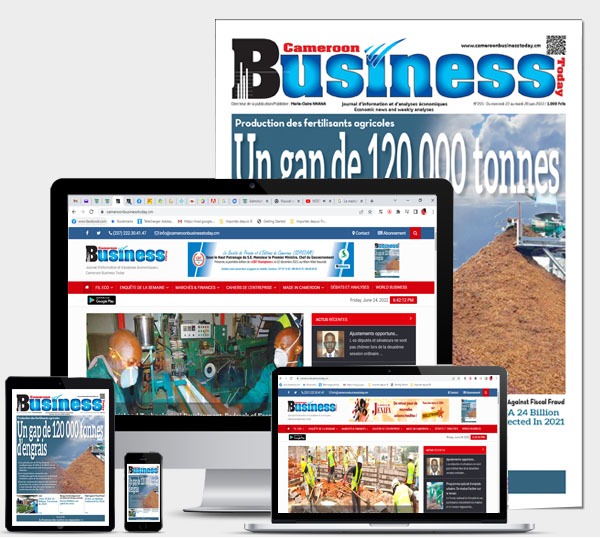
Unlimited access to Cameroon Business Today Digital from 13,250 FCFA
I subscribe1 minute is enough to subscribe to Cameroon Business Today Digital!

- Your special Cameroon Business Today issue in digital version
- Inserts
- Exclusive calls for tenders
- Preview (access 24 hours before publication)
- Editions available on all media (smartphone, tablets, PC)










Commentaires