




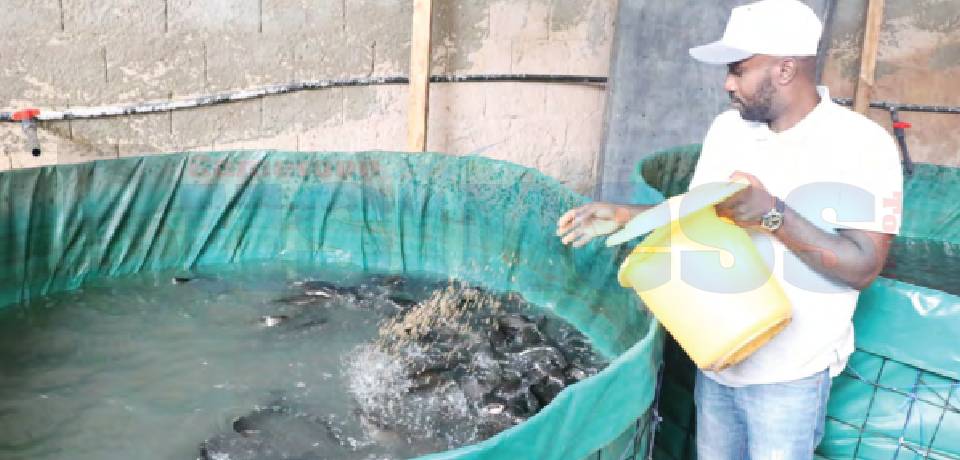
T he Government is in tensifying efforts to raise domestic fish production as part of its broader policy of import substitution, aimed at reducing the country’s dependence on imported food and strengthe ning national food security. At the centre of this drive is the Integrated Agropastoral and Fisheries Import-Substitution Plan (PIISAH), which places fish among the priority products whose local production must be increased. The plan targets a substantial rise in fish output while encouraging greater par ticipation by private operators and development partners. In January 2025, the Government announced measures aimed at reaching 602,500 tonnes of fish production by 2026. To achieve this objective, the Ministry of Livestock, Fisheries and Animal Industries (MINE PIA) is strengthening both capture fisheries and aqua culture. Measures include the acquisition and distribution of fishing equipment, construction and rehabilitation of landing facilities, improvement of fish conservation and marketing infrastructure, and training for fishermen and fish farmers. The construction of fish mar kets at Idenau and Youpwe, as well as the modernisation of the Youpwe landing stage in Douala, form part of the programme. Aquaculture is receiving par ticular attention because of its potential to increase pro duction throughout the year. Government programmes sup port intensive fish farming, provide equipment and inputs, distribute improved finger lings, and train producers in modern production techniques. MINEPIA’s fisheries production programme has set targets of 25,000 tonnes of aquaculture production during 2025–2027 and 50,000 tonnes by 2030. Another major intervention is the Inland Aquaculture Promotion Projec...
This article is for subscribers only
Already subscribed? Identify yourself >
Unlimited access to Cameroon Business Today Digital from 13,250 FCFA
I subscribe1 minute is enough to subscribe to Cameroon Business Today Digital!

- Your special Cameroon Business Today issue in digital version
- Inserts
- Exclusive calls for tenders
- Preview (access 24 hours before publication)
- Editions available on all media (smartphone, tablets, PC)











Commentaires